
Why Am I Doing This? The Power of Paying Attention
I ask myself the same question over and over again: Why am I doing this?
I ask it about the big things, yes, but increasingly I ask it about the little ones. Why am I making plans with someone whose company I don’t really enjoy anymore? Why am I trying to solve next Monday’s dinner on a Wednesday? Why am I buying that sweatshirt? Why am I reaching for my phone?
Most of our lives run on some degree of autopilot. This makes sense. We make thousands of decisions every day, and it would be exhausting to carefully examine the motivation behind every single one. Habits, routines, and shortcuts make our lives easier. They allow us to get through the day without having to consciously decide how to do every single thing.
But autopilot has a downside: sometimes we keep doing things long after they’ve stopped making sense for us. Sometimes we’re not even particularly aware that we’re making a choice at all.
How Much of Your Life Is Habit?
We tend to save self-reflection for the big decisions. Should I leave my job? Is this relationship working? Do I want to move? What do I want to do with my life? These are obviously important questions, and they deserve our attention.
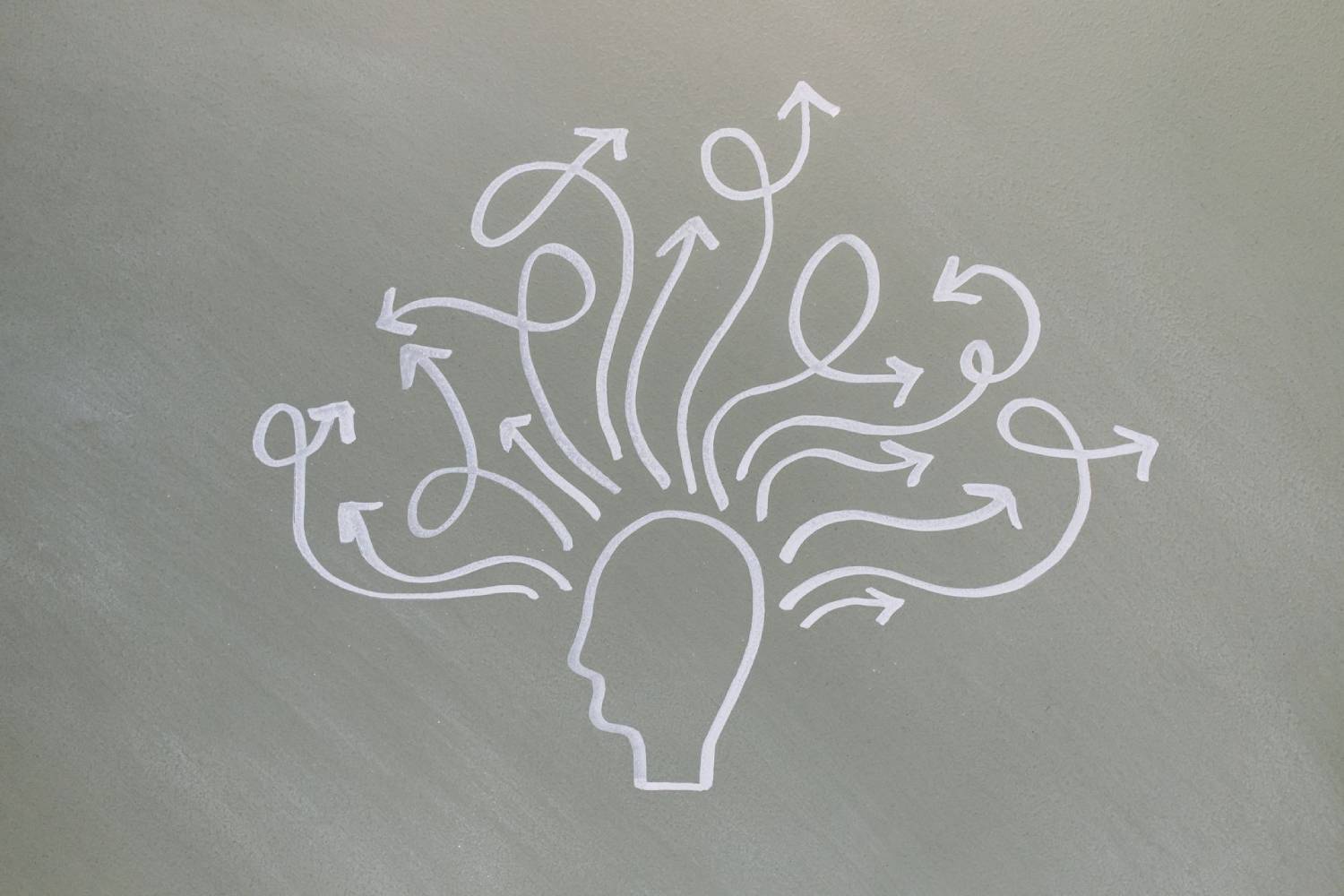
But our lives are mostly made up of much smaller decisions that we barely notice we’re making. We say yes to the invitation. We open the app. We buy the thing. We start worrying about next week. We agree to take something on. Often, there’s barely a pause between the impulse and the action.
And underneath those small choices are often patterns that have been operating for a long time. Maybe you automatically say yes because disappointing people makes you uncomfortable. Maybe you start solving problems long before they need to be solved because uncertainty makes you anxious. Maybe you keep doing something because it’s simply what you’ve always done.
None of those patterns are necessarily bad. In fact, many of them probably developed for perfectly good reasons. Being accommodating can help us maintain relationships. Planning ahead can make life run smoothly. Habits save us enormous amounts of mental energy.
The question is whether the pattern is still serving you now.
I’ve started trying to notice more of those moments. Sometimes when I ask myself why I’m doing something, I realize I’m saying yes because I’ve always said yes, rather than because I actually want to. Sometimes I realize I’m worrying about something because uncertainty makes me uncomfortable, even though there is absolutely nothing I can do about it today.
And sometimes the answer is incredibly mundane. I wasn’t reaching for my phone because there was something I genuinely wanted to look at. I was bored, and my brain has learned that my phone provides a very quick solution to boredom. Once I noticed that, I could make a different choice. I could reach for my Kindle instead.
None of these observations are particularly earth-shattering. But that’s also kind of the point.

Awareness Creates Choice
One of the ideas that comes up frequently in therapy is that we can’t really change patterns we don’t notice. When our reactions and behaviours happen automatically, there isn’t much room to choose something different. The moment we become aware of what we’re doing — and what might be driving it — we create a little bit of space.
That space can be surprisingly useful. Instead of automatically saying yes, we can notice the discomfort that comes with saying no and decide whether we want to tolerate it. Instead of immediately trying to solve a future problem, we can recognize that what we’re actually trying to solve is our anxiety about not knowing what will happen. Instead of opening our phones without thinking, we can notice the urge and decide whether that’s actually how we want to spend the next ten minutes.
That doesn’t mean we always need to make a different choice. Sometimes I ask myself why I’m doing something and decide that I have a perfectly good reason. Sometimes I make the plans, worry about Monday’s dinner, buy the sweatshirt, or scroll on my phone anyway.
Self-awareness isn’t about relentlessly optimizing every decision or turning your life into one giant self-improvement project. That sounds exhausting too. It’s simply about becoming a little more intentional about which behaviours, habits, and obligations still belong in your life.
The question Why am I doing this? can help us distinguish between what we actually want and what we’re doing because of habit, anxiety, guilt, avoidance, or someone else’s expectations.
Small Choices Add Up
We often think change needs to be big to matter. We imagine making a dramatic career move, ending a relationship, developing an entirely new routine, or finally figuring out exactly what we want from our lives. But most change doesn’t happen in one enormous decision. It happens through hundreds of smaller ones.
Maybe you stop automatically accepting every invitation. Maybe you leave a problem for tomorrow because tomorrow is when it actually needs your attention. Maybe you spend half an hour reading instead of scrolling. Maybe you notice that something you’ve been doing for years no longer feels like something you want to do.
Each individual decision is pretty unremarkable. Together, they start to shape how you spend your time, where you put your energy, and ultimately what your life feels like.
Radical self-awareness can sound like a very serious undertaking. We might imagine that it requires understanding our childhoods, identifying our deepest fears, or uncovering some enormous insight about why we are the way we are. And sometimes it does involve that kind of deeper work.
But self-awareness also happens in much more ordinary moments. It’s catching yourself halfway through an ordinary Tuesday and noticing that you’re doing something you don’t actually want to be doing. It’s wondering why you agreed to something, why you’re worrying about something, or why your hand automatically reached for your phone.
One of those moments probably won’t change your life. But enough small moments of awareness can change the shape of a day. And enough days can eventually change the shape of a life.
Sometimes meaningful change starts with a surprisingly simple question:
Why am I doing this?